How Voluntary Benefits Help Employers Control Costs

Rising healthcare costs continue to challenge employers trying to maintain competitive benefits while managing tighter budgets. Employer health plan expenses are expected to increase by about 7% per employee in 2026, forcing many organizations to explore alternative benefit strategies.

One increasingly common solution is voluntary benefits, which are supplemental benefits employees can choose and typically pay for through payroll deductions. These benefits allow employers to expand their offerings without significantly increasing benefit costs.

Expanding Benefits Without Increasing Employer Spending

Voluntary benefits allow employers to add coverage options without fully funding them. Plans such as accident insurance, hospital indemnity, and critical illness coverage are often employee-paid, making them a cost-effective way to build a comprehensive benefits package.

This strategy has become widely adopted. In fact, 87% of employers offer at least one voluntary benefit, showing how organizations are expanding benefits while maintaining budget control.

Improving Retention Without Increasing Salaries

Benefits play an important role in employee retention. Replacing an employee can cost 50 to 200 percent of their salary, which makes retention strategies critical for controlling workforce costs.

Research shows 83% of employees are more likely to work for an employer that offers supplemental benefits, and 77% say voluntary benefits are an important part of a comprehensive benefits package.

For employers, recruiting and onboarding are ideal times to highlight voluntary benefits so new employees understand the full value of their total compensation package.

Helping Employees Manage Out-of-Pocket Medical Costs

Many employers have adopted high-deductible health plans (HDHPs) to help control premium costs. As a result, employees often face higher out-of-pocket medical expenses.

Voluntary benefits help close that gap by providing cash payments when certain medical events occur. For example:

  • Accident insurance pays benefits after injuries
  • Hospital indemnity plans provide payments for hospital stays
  • Critical illness coverage provides lump-sum payments after major diagnoses

These benefits can help employees cover deductibles, copays, and other unexpected expenses, giving them multiple ways to manage healthcare costs. During open enrollment, employers can share how to pair voluntary benefits with HDHPs, so employees understand how the benefits complement their health plan.

Voluntary benefits offer employers a practical way to strengthen their benefits package without significantly increasing costs. They expand employee choice, support financial protection, and improve retention while helping employers manage budgets.

Partnering with Pierce Group Benefits

For many organizations, voluntary benefits are becoming an important part of a sustainable benefits strategy. Employers who partner with us to offer these benefits show a strong commitment to supporting their employees’ health and financial well-being. To learn more, contact your Pierce Group Benefits Account Executive or email partnership@piercegroupbenefits.com.

Short-Term vs. Long-Term Disability Explained

Two common types of disability coverage are short‑term disability and long‑term disability. They serve a similar purpose, but they are designed for different situations.

What Is Short‑Term Disability?

Short‑term disability provides temporary income replacement when the insured is unable to work due to a qualifying medical condition.

Typical Features:
  • Coverage duration is usually 3 to 6 months, sometimes up to 1 year.
  • The waiting period is often 0 to 14 days before benefits begin.
  • The benefit amount typically replaces 50 percent to 70 percent of the insured’s income.
Common Uses:
  • Recovery from surgery
  • Pregnancy and childbirth
  • Short-term illnesses
  • Non-work-related injuries

When Short‑Term Disability Makes Sense

Short‑term disability is ideal for temporary conditions where recovery is expected within a few weeks or months. It acts as a financial bridge during short gaps in income for the insured individual.

What Is Long‑Term Disability?

Long‑term disability provides income protection for serious or ongoing medical conditions that prevent the insured person from working for an extended period.

Typical Features:
  • Coverage duration may be 2 years, 5 years, 10 years, or until retirement age.
  • The waiting period is often 90 to 180 days after disability begins, typically starting after short‑term disability ends.
  • The benefit amount usually replaces 50 percent to 60 percent of the insured’s income.
Common Uses:
  • Chronic illnesses
  • Severe injuries
  • Cancer treatments
  • Degenerative diseases
  • Long-term mental health conditions

When Long‑Term Disability Is Essential

Long‑term disability is crucial for protecting the financial future of an insured individual who is unable to work for an extended period, or who may never return to work.

Do Insured Individuals Need Both Short‑Term and Long‑Term Disability?

In many cases, yes. They complement each other.

  • Short‑term disability covers immediate income needs.
  • Long‑term disability provides long-lasting financial security if recovery takes longer than expected.

Without short‑term disability, the insured may face a gap before long‑term disability benefits begin. Without long‑term disability, the insured person may struggle financially after short‑term disability expires.

Short‑term and long‑term disability coverage both play important but different roles in protecting the insured’s income. Short‑term disability supports the insured during temporary setbacks, while long‑term disability protects against the financial impact of more serious or long-lasting health challenges.

Partnering with Pierce Group Benefits

Employers who partner with us to offer short-term and long-term disability show a strong commitment to supporting their employees’ health and financial well-being. Employees gain access to an invaluable safety net to help with medical bills and everyday expenses. This added protection offers peace of mind and greater financial stability for themselves and their families. To learn more, contact your Pierce Group Benefits Account Executive or email partnership@piercegroupbenefits.com.

Employee Benefit Trends to Prepare for in 2026

2026 brings a new wave of change to the employee benefits landscape. Driven by new legislation, ever changing compliance requirements, and rising employee expectations, this year is shaping up to be pivotal for employers. Organizations that stay informed and proactive will be best positioned to manage risk while delivering meaningful value to their workforce. Here’s what to watch for in the months ahead:

Employees Facing Rising Financial Concerns

Rising economic uncertainty combined with increasing healthcare and cost of living expenses have brought financial security front and center for employees. In a study conducted by MetLife, “83% of employees say rising living expenses and medical costs are their top stressors and 77% say economic uncertainty is a major concern”.  Employers can work to ease the strain of financial uncertainty on their employees by providing access to voluntary benefits such as Health Savings Accounts (HSAs), Flexible Spending Accounts (FSAs), Disability Benefits, and Assistance Programs that reduce financial burdens and provide paycheck protection in the event of a medical emergency.

Increased Interest in Employee Assistance Programs

Mental health continues to be a hot  topic. In 2026, the focus shifts slightly, from mental health to mental fitness. Mental fitness reframes the conversation to that of proactivity and building emotional resilience. Employers can support their employees in their goals of mental fitness by providing Employee Assistance Programs (EAPs). An EAP provides employees with confidential resources to help deal with life’s everyday stressors. From grief counseling to help finding pet care, an EAP offers a wide range of assistance to support your employees through every stage of life. According to employers surveyed by MetLife, for every $1 they invested into the health of their employees, they could expect to receive a $2.30 ROI from productivity, retention, and decreased medical spending. In addition to employer costs savings, employees of these companies reported a 25% increase in productivity and loyalty – important metrics in todays market.

Wellness Initiatives as an Employee Non-Negotiable

As younger generations enter the workforce, the demand for work-life balance and  Wellness Initiatives are at an all-time high. Expect a  trend toward viewing wellness  as an essential need rather than a nice-to-have perk. In 2025, McKinsey reported that Millennial and Gen Z consumers – despite making up only 36% of the population – account for more than 41% of annual wellness spend. With that in mind, here are some key shifts that are set to shape wellness programs in 2026.

  • Holistic Approaches: Employees are not only seeking ways to support their physical health, but their mental and emotional health too. Working to support all three helps employees reduce stress, burnout, and live healthier more productive lives.
  • Women’s Health: There is an increase in employees seeking fertility support, menopause care, and maternal health resources. As a result, many employers are now offering increased fertility benefits such as IVF, expanded parental leave, and menopause symptom management programs.
  • Financial Health: A Vanguard study found that 84% of Americans have some form of financial resolution in 2026. Many employers are offering programs to assist their employees in meeting their financial goals, from financial education workshops to debt counseling.

Employee Benefits Changes as a Result of the OBBA

Many of the changes to employee benefits plans implemented in the One Big Beautiful Bill Act (OBBA) are set to go into effect in 2026.

  • Health Savings Accounts (HSAs): The OBBA expanded access to HSAs for employees that are enrolled in High-Deductible Health Plans (HDHPs). The act provides employers with the ability to offer telehealth and remote healthcare services before HDHP deductibles have been met without jeopardizing the employee’s HSA eligibility. The OBBA also expands HSA access by allowing employees who have direct primary care (DPC) arrangements to contribute to an HSA if their monthly fees meet a set minimum. Additionally, HSAs may now be used to cover DPC fees.
  • Dependent care accounts (DCAs): The OBBA also expanded DCAs, a type of Flexible Spending Account (FSA). A DCA provides employees the ability to set aside pre-tax money to cover eligible dependent care expenses. The OBBA raised the contribution limit from $5,000 to $7,500. Employers who offer DCAs are recommended to review with their advisors to determine how this increase may impact annual nondiscrimination testing results.

Focus on Student Loan Assistance Programs

With increasing economic pressures, employees are looking for relief wherever they can find it. One way employers can help is by offering a Student Loan Assistance Program. In the Federal Reserve’s most recent report on economic well-being, 30% of all adults (or 4 in 10 who pursued higher education) reported taking out student loans to pay for their education. 17% reported having outstanding loans that they are still working to repay. 2026 is a great time to invest in these programs as the OBBA extends the student loan provision of employer-sponsored education assistance programs and adjusts the tax-free benefit limit to $5,250/employee. Robust employee benefits packages remain a powerful tool for  attracting  top talent, boosting retention and engagement, and fostering a healthy and thriving workforce. As the public sector landscape and employee expectations evolve, it’s essential for employers to regularly asses their benefits  to ensure they are providing access to the coverage and support their employees value most.

Partnering with Pierce Group Benefits

Curious how you can harness these trends to support your employees in 2026?  Contact your Pierce Group Benefits Account Executive or reach out to a PGB Representative at partnership@piercegroupbenefits.com .


Cassone, M. (2026, January 7). New MetLife data finds rising cost pressures outpacing gains in workforce well-being. MetLife. https://www.metlife.com/about-us/newsroom/2026/january/new-metlife-data-finds-rising-cost-pressures-outpacing-gains-in-workforce-well-being/#

Pione, A., Medalsy, J., Weaver, K., Callaghan, S., & Rickert, S. (2025, May 29). The Future of Wellness Trends Survey 2025. McKinsey & Company. https://www.mckinsey.com/industries/consumer-packaged-goods/our-insights/future-of-wellness-trends

Report on the economic well-being of U.S. households in 2024 – May 2025 – higher education and student loans. Board of Governors of the Federal Reserve System. (2025, June 12). https://www.federalreserve.gov/publications/2025-economic-well-being-of-us-households-in-2024-higher-education-and-student-loans.htm


Hospital Indemnity Insurance: Why Health Insurance Alone Isn’t Enough

When most people say they are “fully covered,” they usually mean they have a strong health insurance plan. And while traditional health insurance is essential, many people are surprised to discover how many out-of-pocket expenses it does not cover, especially after an unexpected hospital stay. That is where hospital indemnity (also known as medical bridge) insurance steps in, providing a powerful financial safety net when life becomes unpredictable.

Understanding the Gaps in Traditional Health Insurance

Even solid medical plans can leave a person facing unexpected costs such as:

  • High deductibles
  • Daily hospital room charges
  • Outpatient procedure fees
  • Ambulance or emergency room costs
  • Lost income during recovery

With healthcare expenses continuing to rise, families are more likely than ever to encounter significant medical bills even with insurance.

What Is Hospital Indemnity Insurance?

Hospital indemnity insurance is supplemental coverage that pays cash benefits directly to policyholders when they are admitted to a hospital or undergo specific treatments. Unlike a primary health plan, these payments are not tied to particular medical bills. Policyholders can use the money however it is needed most, including:

  • Rent or mortgage
  • Groceries
  • Childcare
  • Transportation
  • Medical bills or copays
  • Other recovery-related expenses

It offers flexible support at a time when policyholders may be dealing with stress, uncertainty, and added financial strain.

Why Health Insurance Alone Is Not Always Enough

Traditional health insurance pays doctors and hospitals. Hospital indemnity insurance pays policyholders. That distinction matters, especially when facing days, weeks, or months of recovery. Many households do not have enough savings to comfortably handle sudden medical expenses or temporary loss of income. Even a brief hospital stay can result in thousands of dollars in unexpected out-of-pocket expenses.

Hospital indemnity insurance helps bridge that financial gap by providing predictable cash benefits when life feels anything but predictable.

Who Benefits the Most?

Hospital indemnity coverage can be especially valuable for:

  • Families with high-deductible health plans
  • Individuals without significant emergency savings
  • Parents with young children
  • Adults caring for aging parents
  • Anyone seeking extra financial peace of mind

A sudden illness or injury can disrupt routines and put real pressure on a family’s finances. Supplemental protection helps ensure one hospital stay does not jeopardize a policyholder’s long-term financial stability.

Partnering with Pierce Group Benefits

Employers who partner with us to offer hospital indemnity insurance show a strong commitment to supporting their employees’ overall wellness and financial well-being. Providing a more comprehensive benefits package not only helps attract and retain top talent, it also builds a loyal and motivated workforce. Employees gain access to an invaluable safety net during a hospital stay and receive a cash benefit to help with medical bills and everyday expenses. This added protection offers peace of mind and greater financial stability for themselves and their families. Together, we can ensure that your team is well‑protected and financially prepared for the future. To learn more, contact your Pierce Group Benefits Account Executive or email partnership@piercegroupbenefits.com.

Employee Benefits: Pre-Tax vs. Post-Tax Deductions

When it comes to employee benefits, understanding the difference between pre‑tax and post‑tax contributions can help you better analyze how your benefits are paid for and how they affect your take‑home pay and taxes. These terms refer to whether benefit costs are deducted from your paycheck before or after taxes are applied.

What Are Pre-Tax Benefits?

Pre-tax benefits are deductions taken from your paycheck before taxes are applied. This means the money you contribute reduces your taxable income, which can lower the amount of taxes you owe.

Common Examples

  • Health Insurance Premiums
  • Flexible Spending Accounts (FSA)
  • Dental Insurance
  • Vision Insurance
  • Cancer Benefits
  • Accident Benefits
  • Medical Bridge Benefits
  • 401(k) Contributions

Advantages

  • Lower Taxable Income: You pay less in federal income tax and sometimes state tax.
  • Immediate Savings: More take-home pay compared to post-tax deductions.

Considerations

  • Taxed Later: For retirement accounts like 401(k), you’ll pay taxes when you withdraw funds.
  • Limits Apply: IRS sets annual contribution limits for certain benefits.

What Are Post-Tax Benefits?

Post-tax benefits are deductions taken after taxes have been calculated. These do not reduce your taxable income, but they can offer other advantages.

Common Examples

  • Short-Term Disability Benefits
  • Long-Term Disability Benefits
  • Critical Illness Benefits
  • Group Term Life Insurance
  • Term Life Insurance
  • Whole Life Insurance
  • Pet Insurance
  • Long-Term Care Benefits
  • Roth 401(k) Contributions
  • Gym Memberships or Wellness Programs

Advantages

  • Tax-Free Growth (Roth Accounts): Withdrawals in retirement are tax-free.
  • Flexibility: No tax implications when using benefits like wellness perks.

Considerations

  • No Immediate Tax Savings: Your taxable income remains the same.
  • Higher Upfront Cost: Since taxes are already applied, your paycheck impact is greater.

While tax treatment matters, the top priority is selecting coverage that protects you and fits your budget.

Maximize Your Employee Benefits Before Year-End

As the year winds down, now is the perfect time to review your employee benefits and make sure you’re getting the most out of them before December 31. Many benefits operate on a “use it or lose it” basis, so acting now can help you avoid leaving money on the table. Here are some tips:

Check Your Flexible Spending Account (FSA) Balance

If you have an FSA, most plans require you to spend the funds by year-end or risk forfeiting them. Consider using remaining dollars on eligible expenses such as:

  • Prescription glasses or contact lenses
  • Over-the-counter medications
  • First-aid supplies

Also, review your plan for any grace periods or carryover options. Some employers allow you to roll over a portion of unused funds.

Schedule Appointments

Don’t let unused benefits go to waste! If you need to schedule:

  • Annual physicals
  • Dental cleanings
  • Vision exams

Reach out to your provider’s office to see if they have any openings.

Plan Ahead for Next Year

While you’re reviewing your current benefits, plan ahead for 2026. Update beneficiaries for life insurance or retirement accounts, confirm your contact information is accurate, and identify the preventive care appointments you’ll need for the coming year.

Managing Holiday Stress with Employee Assistance Programs (EAPs)

The holiday season is often portrayed as a time of joy, celebration, and togetherness. However, for many employees, it can also bring financial strain, family pressures, and the challenge of balancing work with personal commitments. These factors can lead to increased stress. That’s where Employee Assistance Programs (EAPs) can help.

Why Holiday Stress Happens

  • Financial Pressure: Gift-giving, travel, and holiday events can strain budgets.
  • Time Management: Balancing work deadlines with family gatherings is tough.
  • Emotional Challenges: Loneliness, grief, or strained relationships often surface during the holidays.

How EAPs Can Help

EAPs are designed to support employees’ mental, emotional, and practical well-being. Here’s how they can make a difference during the holidays:

  • Confidential Counseling Services
    • Professional counselors can help employees manage stress, anxiety, and family conflicts.
    • Virtual sessions make it easy to access support from anywhere.
  • Financial Guidance
    • Many EAPs offer financial counseling to ease holiday-related money worries.
  • Work-Life Balance Resources
    • Tips for time management and prioritization help employees stay productive without sacrificing personal time.

The holidays should be a time of joy, not stress. By leveraging EAP resources, employees can navigate challenges with greater peace of mind.

Partnering with Pierce Group Benefits

Partnering with Pierce Group Benefits (PGB) provides access to comprehensive EAPs designed to support employees’ mental health. If you’re an employee with an EAP, you can locate your provider by visiting your custom microsite. For employers seeking more information about EAPs, contact your Pierce Group Benefits (PGB) Account Executive or reach out to a PGB representative at partnership@piercegroupbenefits.com.

Dependent Care FSA Guide

This guide will provide a comprehensive overview of a Dependent Care Flexible Spending Account (DCFSA), detailing its functionality.

What is a Dependent Care FSA?

A Dependent Care FSA is a tax-advantaged account that allows you to save pre-tax dollars specifically for dependent care expenses. These funds can generally be used to care for qualifying children under the age of 13, as well as your spouse or relatives who live with you and are physically or mentally incapable of self-care. For a comprehensive list of qualifying persons, please visit the IRS website.

Contribution Limits

For the 2025 tax year, you can contribute up to $5,000 per household ($2,500 if married and filing separately). In 2026, the limit will increase to $7,500 per household ($3,750 if married and filing separately).

Eligible Expenses

You can use Dependent Care FSA funds for:

  • Daycare and preschool fees
  • Before and after-school programs
  • Summer day camps
  • Adult daycare services

How to Enroll

You can enroll in a Dependent Care FSA during your employer’s open enrollment period, or if your employer allows, due to a Qualifying Life Event (QLE). Decide how much to contribute for the year and fill out the necessary forms.

Accessing Your Dependent Care FSA Funds

  1. First, you pay for the dependent care services out of your own pocket. This could be for daycare, preschool, summer camps, or adult daycare services.
  2. After you’ve paid for the services, you submit a claim to your FSA administrator. This usually involves filling out a claim form and providing proof of the expense, such as receipts or invoices.
  3. Once your claim is approved, you will be reimbursed from your Dependent Care FSA. The reimbursement can be deposited directly into your bank account or sent to you as a check, depending on your plan’s options.

Tips for Reimbursement

  • Always keep copies of your receipts and claim forms for your records.
  • Submit your claims as soon as possible after incurring the expense to ensure timely reimbursement.
  • Be aware of any deadlines or specific requirements your plan may have for submitting claims.

A Dependent Care FSA can help you manage the costs of dependent care. By understanding how it works and planning your contributions, you can make the most of this benefit.

Partnering with Pierce Group Benefits

This benefit not only helps reduce the financial burden of dependent care but also supports employees in balancing their work and family responsibilities. For more information on Dependent Care FSAs, speak with your PGB Account Executive or get in touch with a PGB Representative at partnership@piercegroupbenefits.com.

Understanding Self-Funded Health Plans in the Public Sector

In today’s rapidly evolving healthcare landscape, public sector organizations are constantly seeking ways to manage costs while providing quality health benefits to their employees. One approach is the self-funded health plan. But what exactly does it mean to have a self-funded health plan, and how does it differ from traditional health insurance?

What is a Self-Funded Health Plan?

A self-funded (or self-insured) health plan is a type of health insurance where the employer assumes the financial risk for providing healthcare benefits to its employees. Instead of paying fixed premiums to an insurance carrier, the employer pays for medical claims out-of-pocket as they are incurred.

Key Features of Self-Funded Health Plans

  1. Cost Control and Flexibility:
    • Public sector employers have greater control over the plan design and can tailor benefits to meet the specific needs of their workforce.
    • Self-funded plans are often subject to fewer regulations compared to fully insured plans, allowing for more customization.
  2. Financial Savings:
    • Any unused funds at the end of the year can be retained by the employer.
  3. Risk Management:
    • Public sector employees can purchase stop-loss insurance to protect against unexpectantly high claims. This coverage kicks in when claims exceed a certain threshold, limiting the employer’s financial exposure.

How Self-Funded Plans Work

In a self-funded plan, the employer sets aside funds to cover anticipated healthcare costs. These funds are used to pay for employees’ medical claims directly. Employers can contract with a third-party administrator (TPA) to handle administrative tasks such as claims processing and provider network management.

Regulatory Environment

Self-funded plans in the public sector are primarily regulated at the federal level under the Employee Retirement Income Security Act (ERISA) and the Public Health Service Act (PHS Act). This means they are not subject to state insurance laws, which can provide additional flexibility but also requires adherence to federal standards.

Is a Self-Funded Plan Right for Your Public Sector Organization?

While self-funded plans offer many benefits, they are not without risks. Smaller public sector organizations may find it challenging to manage the financial volatility associated with high-cost claims. However, with the right risk management strategies, such as stop-loss insurance, even smaller employers can consider self-funding.

Partnering with Pierce Group Benefits

Self-funded health plans can be a powerful tool for public sector organizations looking to control healthcare costs and customize benefits. By understanding the mechanics and regulatory environment of self-funded plans, public sector employers can make informed decisions that best suit their organizational needs. To learn more about self-funded health plans, contact your dedicated Pierce Group Benefits Account Executive or reach out to a PGB Representative at partnership@piercegroupbenefits.com for further information.

Five Employee Benefit Trends in 2025

As we start 2025, the landscape of employee benefits continues to evolve, driven by changing workforce demographics, technological advancements, and a greater emphasis on holistic well-being. Here are five key employee benefit trends to watch this year:

1. Long-Term Care Planning

As the population ages, long-term care insurance is becoming an essential benefit. Employers are offering long-term care insurance to help employees plan for future medical and personal care needs. This insurance provides coverage for services such as nursing home care, home health care, and personal or adult daycare. By including long-term care insurance in their benefits packages, organizations are helping employees secure their financial future and reduce the stress associated with potential long-term care expenses.

2. Mental Health Resources

The focus on mental health has never been more prominent. Employers are expanding their Employee Assistance Programs (EAPs) to provide comprehensive mental health resources. These programs often include access to therapy, counseling services, and stress management programs. This trend reflects a growing recognition of the importance of mental well-being in overall employee productivity and satisfaction.

3. Financial Wellness Programs

Financial stress is a significant concern for many employees. In response, employers are providing financial wellness programs that include budgeting tools, debt management resources, student loan repayment assistance, and retirement planning assistance. These programs aim to help employees achieve greater financial stability and reduce stress.

4. Fitness Incentives

The integration of technology into health and wellness programs is on the rise. Health apps that include online workouts and discounts on gym memberships are being incorporated into employee wellness initiatives, providing convenient and engaging ways for employees to stay healthy.

5. Sustainable Initiatives

Employees are increasingly valuing organizations that prioritize sustainability. Benefits that support these values, such as volunteer time off, green commuting incentives, and sustainable office practices, are becoming more common.

The trends in employee benefits for 2025 reflect a broader shift towards a more personalized, holistic, and flexible approach to supporting employees. By staying ahead of these trends, organizations can attract and retain top talent, foster a positive work environment, and enhance overall employee well-being.

Partnering with Pierce Group Benefits

Reach out to your Account Executive or email partnership@piercegroupbenefits.com to explore how your organization can leverage these trending benefits and other innovative solutions to maximize employee satisfaction. Our team is dedicated to helping you create a workplace that attracts and retains top talent while fostering a culture of well-being and success.

Term Life vs Whole Life Insurance

When it comes to life insurance, choosing the right type can be a daunting task. Two of the most common options are term life insurance and whole life insurance. Each has its own set of benefits and understanding these can help you make an informed decision. Let’s dive into the key benefits of term life and whole life insurance.

What is Term Life Insurance?

Term life insurance provides coverage for a specific period, or “term,” such as 10, 20, or 30 years. If the policyholder passes away during this term, the beneficiaries receive a death benefit.

Benefits of Term Life Insurance:

  • Affordability: Term life policies are generally more affordable than whole life policies, making them accessible for many people.
  • Simplicity: These policies are straightforward, with no investment component or cash value accumulation.
  • Flexibility: You can choose the term length that best fits your needs, such as covering the years until your children are grown or your mortgage is paid off.

What is Whole Life Insurance?

Whole life insurance provides coverage for the policyholder’s entire life, as long as premiums are paid. It also includes an investment component, accumulating cash value over time.

Benefits of Whole Life Insurance:

  • Lifetime Coverage: Whole life insurance covers you for your entire life, ensuring that your beneficiaries will receive a death benefit no matter when you pass away.
  • Cash Value: Part of your premium goes into a savings component, which grows over time and can be borrowed against or withdrawn.
  • Fixed Premiums: Your premiums remain the same throughout the life of the policy, providing predictability in your financial planning.
  • Tax Benefits: The cash value growth is tax-deferred, and the death benefit is generally tax-free to your beneficiaries.

The Benefits of Enrolling in Both

When it comes to life insurance, you don’t have to choose just one type. By enrolling in both term life and whole life insurance, you can enjoy a range of benefits that cater to both your immediate and long-term needs.

  • Comprehensive Coverage: By enrolling in both types, you can cover immediate needs with term life insurance and long-term needs with whole life insurance.
    Cost Management: Use term life insurance for high coverage at a lower cost during critical periods (e.g., raising children, paying off a mortgage) and whole life insurance for lifelong coverage and cash value accumulation.
  • Flexibility: This approach allows you to adjust your coverage as your financial situation and needs change over time.
  • Financial Security: The combination provides a balance of affordability, coverage, and investment, ensuring both short-term and long-term financial security for your family.

By leveraging the strengths of both term life and whole life insurance, you can create a robust and flexible life insurance strategy that adapts to your evolving needs and financial goals.

Partnering with Pierce Group Benefits

Employers who partner with us to provide both term life and whole life insurance options demonstrate a commitment to their employees’ financial well-being and security. Offering a comprehensive benefits package helps attract and retain top talent, fostering a loyal and motivated workforce. Employees benefit from having access to tailored life insurance solutions that meet their diverse needs, providing peace of mind and financial stability for their families. Together, we can ensure that your team is well-protected and financially prepared for the future. Contact your Pierce Group Benefits Account Executive or email partnership@piercegroupbenefits.com to learn more.

Maximizing Employee Benefits Before Year-End

As the end of the calendar year approaches, it’s essential to take full advantage of the employee benefits that may reset on January 1. Whether it’s your flexible spending account (FSA), dependent care flexible spending account (DCFSA), dental insurance, or vision insurance, now is the time to ensure you’re making the most of what’s available to you. Here’s how to utilize these benefits effectively before the year ends.

Flexible Spending Account (FSA)

An FSA allows you to set aside pre-tax dollars for eligible medical expenses. Since these funds typically don’t roll over into the next calendar year, it’s crucial to spend them wisely. Here are some tips:

  • Schedule Appointments: If you have outstanding medical needs, be sure to schedule your appointments before the year ends. This may include routine check-ups or any necessary procedures. Remember, your FSA can help cover eligible expenses, such as copays and prescription medications, making it easier to manage your healthcare costs.
  • Stock Up on Supplies: Purchase eligible items through the FSA Store, such as first-aid supplies, contact lens solution, or even sunscreen, to use your remaining balance.

Note: While a flexible spending account (FSA) allows you to set aside pre-tax dollars for eligible medical expenses, it’s important to note that funds typically do not roll over into the next plan year. Therefore, any unused funds at the end of the plan year may be forfeited. Some FSAs may offer a grace period of up to two and a half months after the end of the plan year, allowing you to incur eligible expenses during that time. Alternatively, some FSAs may include a rollover provision, which allows you to carry over a certain amount of unused funds to the next plan year, subject to the maximum limit set by the Internal Revenue Service (IRS). However, these options are not guaranteed and varies by employer. Review your specific FSA plan for details to understand your options.

Dependent Care Flexible Spending Account (DCFSA)

If you have children or dependents, a DCFSA can help you save on childcare costs. Similar to an FSA, funds in a DCFSA typically do not roll over to the next calendar year, so consider the following:

  • Plan for Childcare Expenses: Review your childcare expenses for the year and ensure you’re submitting claims for any eligible costs incurred.
  • Utilize Care Services: If you have unused funds, consider enrolling your child in a holiday camp or after-school program to maximize your benefits.

Note: The rollover option does not typically apply to dependent care flexible spending accounts (DCFSA). Unused funds in a DCFSA are generally forfeited at the end of the plan year. However, some DCFSA plans do offer a grace period of up to two and a half months after the plan year ends, during which you can incur eligible expenses and use any remaining funds from the previous year. Review your specific DCFSA plan for details to understand your options.

Dental Insurance

Dental insurance often operates on a calendar year with an annual limit. To make the most of your coverage, be sure to utilize your benefits before they reset:

  • Schedule Routine Cleanings: If you haven’t had your biannual cleaning yet, now’s the time to book an appointment. Preventive care is usually fully covered, so take advantage of it!
  • Address Any Dental Issues: If you’ve been putting off dental work, such as fillings or crowns, consider scheduling these procedures before the year ends to utilize your benefits. You might also think about splitting up non-emergency treatments between the end of this calendar year and the beginning of the next. This way, you can maximize your coverage and ensure you don’t miss out on any benefits before they reset. Please consult with your dentist to determine the best approach for your specific needs.

Vision Insurance

Like dental insurance, vision benefits often reset at the end of the calendar year. Here’s how to maximize your vision coverage:

  • Get an Eye Exam: If you haven’t had an eye exam this year, schedule one soon. Many plans cover the cost of an annual exam.
  • Update Your Eyewear: If you need new glasses or contacts, use your vision benefits to purchase them before the year ends. Check if your plan offers discounts on frames or lenses.

Note: Please check your policy’s effective dates for the end of the plan year, as some dental and vision plans do not operate on a calendar year.

As the calendar year ends, take the time to review your benefits and make the most of what’s available. By utilizing your FSA, DCFSA, dental, and vision insurance, you can save money and ensure you’re taking care of your health and well-being.

Partnering with Pierce Group Benefits

At PGB, our dedicated team is committed to empowering clients’ employees to effectively utilize their employee benefits. If you have questions about how the end of the calendar year affects your benefits, contact your dedicated Pierce Group Benefits Account Executive or reach out to a PGB Representative at partnership@piercegroupbenefits.com for further information.

Qualifying Life Events: When to Update Your Benefits

For most benefits, you elect to have the benefit for the entire plan year, with changes typically made during the next enrollment period. However, there are exceptions allowing you to make changes to your benefits outside of your enrollment period, known as qualifying life events (QLEs) or qualifying mid-year events.

What Are Qualifying Life Events?

Qualifying life events are specific circumstances, as defined by the Internal Revenue Service (IRS), that allow you to make changes to your benefits outside of the annual enrollment period. Common QLEs include marriage, divorce, birth, or adoption, and retirement. If you think you might need to make a change to your insurance coverage, review the list below to see if any of these events are applicable to your situation. It is important to note that “applicable” refers to a change that is directly related to the individual experiencing the QLE; changes based on financial reasons alone are not allowed under current IRS regulations; and documentation to confirm changes may be required.

List of Qualifying Life Events

Dependent Changes

  • Birth, Adoption, or Foster Care Placement: Add a new dependent to your benefits within 30 days of the birth, adoption, or placement date. Required documents may include a copy of the birth certificate, adoption decree, or official state agreement for placement and the dependent’s social security number.
  • Dependents Aging Out: Different policies have different age restrictions for dependent coverage, such as 18, 21, or 26 years old. Check your policy and notify the provider when a dependent has aged out to adjust your deductions.

Household Changes

  • Marriage: Add a new spouse to your policy within 30 days of the marriage date, requiring a copy of the marriage certificate.
  • Legal Separation: Remove a spouse from your policy within 30 days of the legal separation date, requiring a copy of the separation agreement or affidavit.
  • Divorce: Remove a former spouse from your policy within 30 days of the divorce date, requiring a copy of the divorce decree.
  • Death of a Spouse or Dependent: Remove a spouse or dependent from your plan within 30 days, requiring a death certificate.

Health Coverage Changes

  • Loss of Employer-Sponsored Health Coverage: If you or a spouse loses health insurance coverage sponsored by your employer, you or your spouse may qualify to join the other’s health plan. Employees, along with their spouse, former spouse, and/or dependents, may have the opportunity to maintain their group health insurance coverage for 18-36 months under COBRA (Consolidated Omnibus Budget Reconciliation Act).
  • Loss of Eligibility for or Entitlement to Medicare, Medicaid, or CHIP: If you, your spouse, or dependent becomes entitled to or ineligible for Medicare or Medicaid, or another similar government or state-sponsored program like CHIP, you qualify to adjust your health coverage accordingly.

Employment and Leave Changes

  • FMLA Leave: A leave of absence covered under the Family & Medical Leave Act (FMLA) qualifies you to make changes to your benefits if needed.
  • Non-FMLA Leave: A leave of absence not covered by FMLA that is for an applicable QLE qualifies you to make changes to your benefits if necessary. However, if a leave of absence occurs for an event not considered an eligible QLE, you will have to wait until the next annual enrollment period to enroll in or make changes to your coverage.
  • Retiring: If you are retiring, you are eligible to make changes to your insurance coverage and may be eligible for government or state-sponsored coverage.
  • Part-Time to Full-Time or Vice Versa: If you are transitioning to full-time, you may qualify for more benefits. If transitioning to part-time, you may need to update your coverage and stop deductions for benefits for which you may no longer be eligible for.
  • Change in Spouse’s Employment or Coverage: If your spouse accepts a new position or changes coverage due to a change in residence or income, they are eligible to make changes to their benefits and may now be eligible to join your coverage.

Pierce Group Benefits (PGB) Accounts

  • Transferring Employers: If you are transferring from one employer to another and both are PGB clients, you may be eligible to transfer your supplemental benefits. Please call our Service Center for assistance.
  • New Hire: If you are joining an employer who is a client of PGB, please review the new hire eligibility and enrollment information found in your benefits guide or on your employer’s benefits microsite.
  • Retiring: If you are retiring from an employer who is a client of PGB, many of your supplemental benefits are portable and can be moved from payroll deduction to direct billing or bank draft. Please call our Service Center for assistance.

Consequences of Inaction on Qualifying Life Events

If you do not take action following a qualifying life event, you will miss the opportunity to adjust your benefits to better suit your new circumstances. This could result in inadequate coverage or unnecessary expenses. For example, failing to add a new dependent within the required timeframe could leave them without essential coverage. Similarly, not removing a dependent after they have aged out could lead to continued deductions for someone no longer eligible for coverage. In essence, neglecting to act on a QLE can lead to financial inefficiencies and gaps in coverage, potentially impacting you, your spouse, and your dependents’ well-being. Therefore, it’s crucial to promptly address any QLEs to ensure your benefits align with your current life situation.

Partnering with Pierce Group Benefits

We understand that life doesn’t always follow an insurance plan year, and changes to your benefits may be necessary. It’s important to review the policies of your employee benefits and adjust as needed to ensure you, your dependents, and others covered under your plan are adequately protected, and that you’re not paying for those who are no longer eligible for coverage. For more information on QLEs, speak with your PGB Account Executive or get in touch with a PGB Representative at partnership@piercegroupbenefits.com.

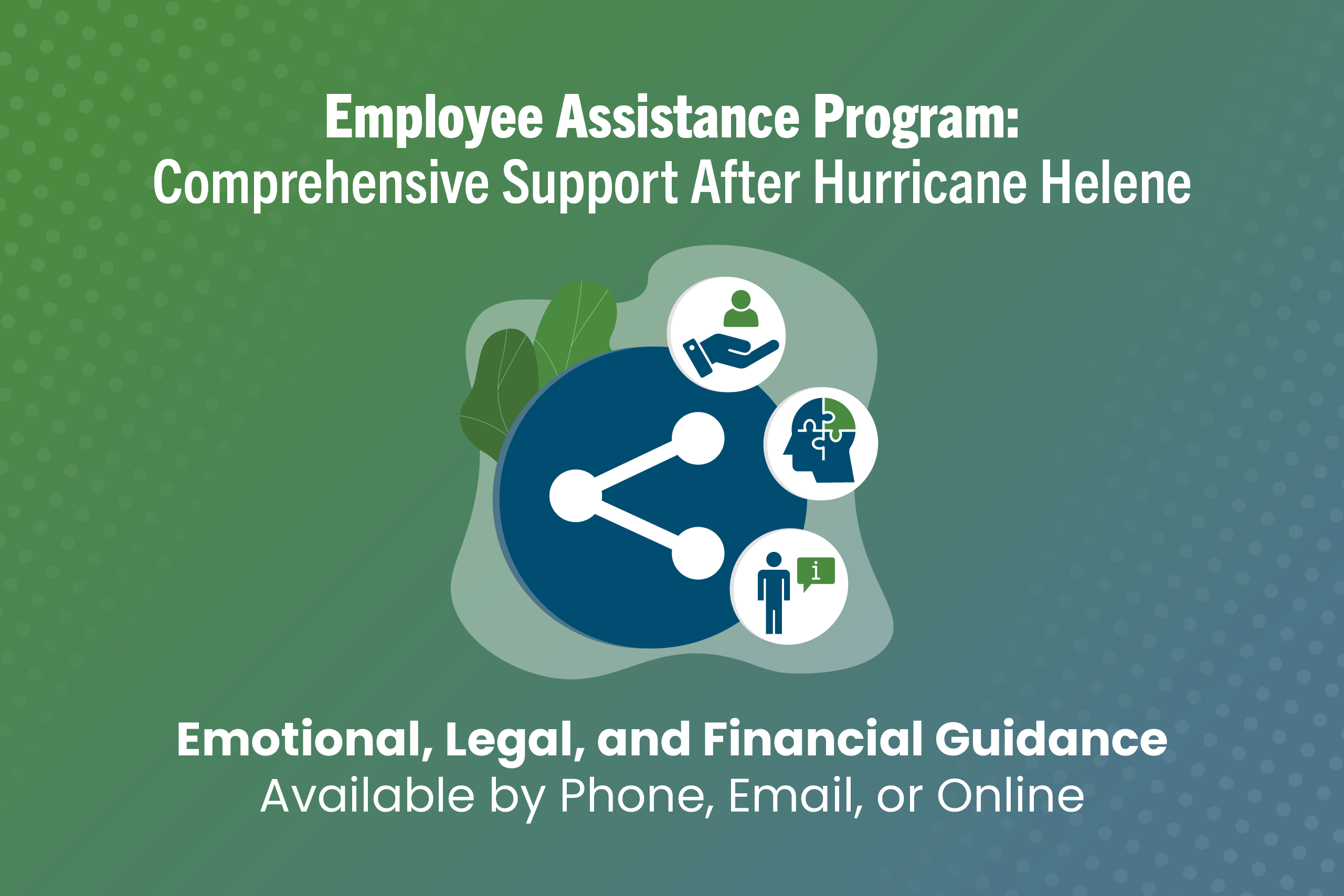
Employee Assistance Programs: Support for Hurricane Helene Recovery

Natural disasters can strike unexpectedly, like the flooding and landslides caused by Hurricane Helene in our home state of North Carolina, bringing destruction and uncertainty. This natural disaster has created a significant need for mental health, financial, and legal guidance, as well as resources for home and life management. During this challenging time, Employee Assistance Programs (EAPs) play an important role in providing support and resources to help you navigate the aftermath.

What is an EAP?

An Employee Assistance Program (EAP) is a company-sponsored, confidential program designed to help you and eligible dependents connect with external professionals and resources to address personal or work-related issues that may impact your job performance, health, and overall well-being.

EAP Resources for Hurricane Helene

EAPs provide essential support and referrals in the aftermath of Hurricane Helene, tailored to help you connect with professionals to manage the unique challenges and stresses that arise as you recover and rebuild. These services can include:

Counseling Services

EAPs offer confidential counseling to help you process experiences, manage emotions, and build resilience, tailored to the trauma and impact from Hurricane Helene, including support for:

  • Trauma, Loss, or Grief
  • Anxiety, Depression, or Stress
  • Alcohol/Substance Use
  • Behavioral Change

Financial and Legal Guidance

  • Financial Consultations: Financial coaches assist with reorganizing the family budget and managing a financial crisis caused by Hurricane Helene.
  • Legal Services: Access legal documents such as power of attorney, and call for a free legal consultation with licensed attorneys who can assist with legal challenges arising from the natural disaster.

Care Resources

  • Elder and Adult Care Resources: Receive referrals for the elderly, disabled adults, and their caregivers during your consultation with our specialists, including finding temporary care solutions and support services.
  • Childcare Resources: Consultants advise on how to select childcare centers, in-home care, after-school care, and disability resources, especially important when regular care arrangements are disrupted by Hurricane Helene.
  • Pet Care Referrals: Consultants offer comprehensive referral services to assist with veterinary selection and boarding for pets affected by the natural disaster.

Home and Life Management Services

  • Home and Transportation Resources: Obtain information and referrals for household repairs, transportation, and housing rental searches, particularly useful when dealing with property damage and displacement caused by Hurricane Helene.
  • Identity Theft Resources: Access resources to protect and recover your identity if it has been compromised during a natural disaster, a common issue when personal documents or information are targeted by phishing scams posing as financial aid or donation requests.

Accessing Your EAP Services

If you are enrolled in an EAP through Pierce Group Benefits, contact the EAP by navigating to the provider’s contact information in the benefits guide on your organization’s custom microsite. Contacting an EAP service is free and confidential, with 24/7 availability and additional online resources on their websites.

Partnering with Pierce Group Benefits

In the wake of Hurricane Helene, the well-being of both employers and employees is paramount, highlighting the necessity of robust support systems to aid in recovery. Partnering with Pierce Group Benefits (PGB) provides access to comprehensive EAPs designed to offer support during these challenging times. For more information on EAPs, speak with your Pierce Group Benefits Account Executive or get in touch with a PGB Representative at partnership@piercegroupbenefits.com.

Planning for the Future with Long-Term Care Insurance

As individuals age or face a major illness or disability, many will find themselves needing long-term care to assist with essential daily activities. These services include tasks like dressing, eating, and moving around, and can be provided at home, adult day cares, assisted living facilities, or nursing homes. With increasing life expectancy, the likelihood of requiring long-term care rises, as nearly 70% of people over 65 will need some form of assistance during their lifetime, and about 35% will require care in a nursing home. Planning ahead for these services is vital in ensuring comfort, safety, and quality of life.

Financial Protection with Long-Term Care Insurance

Long-term care (LTC) insurance offers protection from the high costs associated with long-term care resulting from a covered illness or injury, such as heart disease, stroke, or broken bones and fractures. Most long-term care claims are filed between the ages of 80 and 89. The benefits from an LTC insurance policy typically pay towards expenses of home care aides, assisted living, and nursing home stays, up to the policy’s limit.

Without long-term care insurance, the costs can be staggering. Even a relatively short stay in a nursing home can cost, on average, between $8,000 and $10,000 per month. Having an LTC policy in place can help safeguard your savings, retirement, and other assets in the event of long-term care.

Additional Benefits of Long-Term Care Insurance

  • Dual Benefits Option: In some hybrid LTC insurance and life insurance policies, the LTC insurance will pay for long-term care expenses first. If there is any benefit amount remaining, or if the long-term care is never needed, it can pay out like a life insurance policy.
  • Fixed Premiums: Certain policies offer fixed premiums, meaning your costs won’t increase over time.
  • Fully Portable: These policies can be fully portable, meaning you can keep your coverage even if you change jobs or retire.

Planning for long-term care is about more than just peace of mind; it’s about protecting your future financial health. Since most people will need some form of long-term care in their lifetime, considering LTC insurance can be an important step in your long-term financial strategy.

Partnering with Pierce Group Benefits

For employers, partnering with us to offer long-term care insurance shows your commitment to your employees’ future financial security by helping them manage the rising costs of long-term care. Our plans can enhance your benefits package and support employee retention and satisfaction. Employees can easily enroll in our LTC insurance plans and start planning for their long-term care needs today. To learn more, contact your Pierce Group Benefits Account Executive or email partnership@piercegroupbenefits.com for further guidance.